How 0.96 Nm Rated Torque Fits Small Robot Wheel Modules
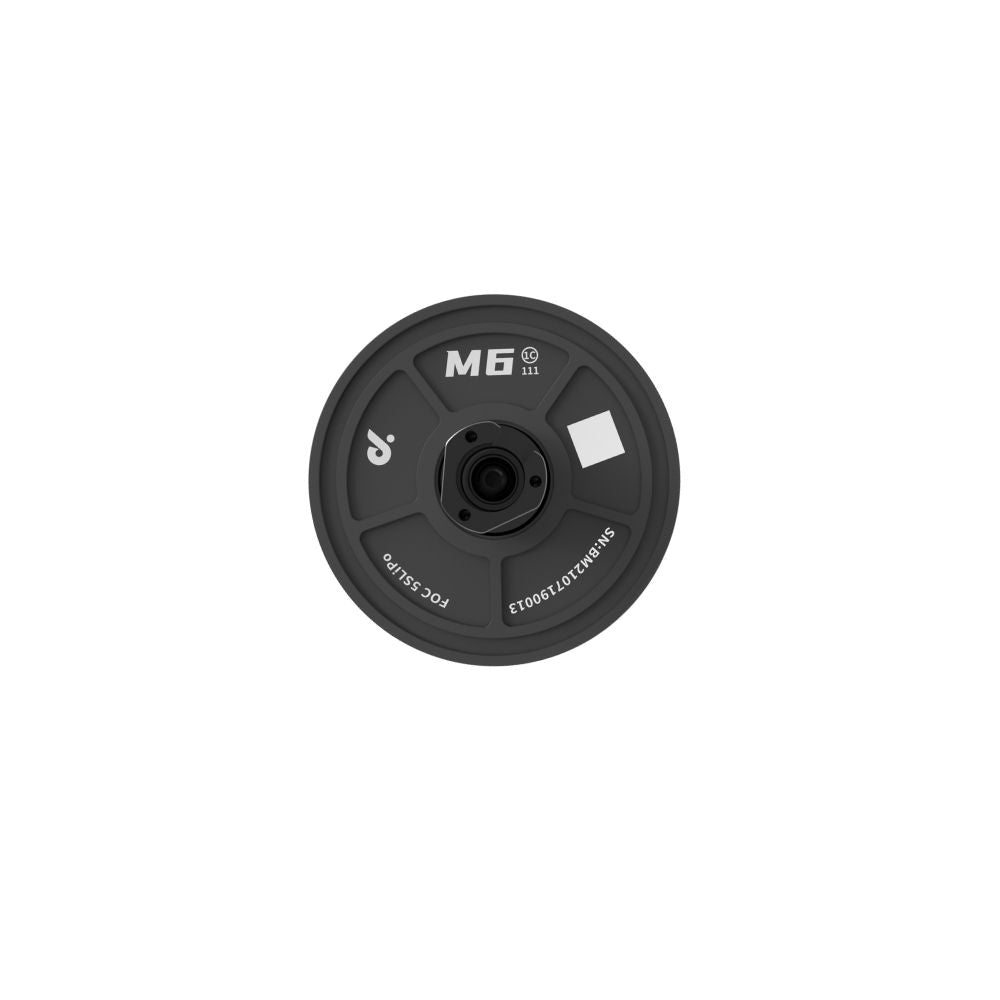
A 0.96 Nm rated torque wheel module is commonly used in compact mobile robots weighing around 5–15 kg, where motor size, battery capacity, wheel diameter, and control accuracy must be balanced. With a 50 mm wheel radius, 0.96 Nm torque can generate about 19.2 N of wheel-ground force before mechanical losses. Combined with 80–90% gearbox efficiency, closed-loop speed control, and brushless motor technology, this torque range supports indoor robots, inspection platforms, and research vehicles requiring stable movement rather than extreme loads.
Small robot wheel modules are designed around the relationship between torque, speed, and mechanical size. A 0.96 Nm rated torque output is usually selected for robots that require reliable movement while keeping the entire drive system compact. For a differential-drive robot with two powered wheels, the combined torque output reaches approximately 1.92 Nm. With 50 mm radius wheels, this produces about 38.4 N of theoretical traction force before considering transmission losses.
A wheel module producing around 1 Nm of torque can provide enough force for many indoor robots while avoiding the weight increase caused by oversized motors.
Robot platforms used for indoor delivery, laboratory research, and facility inspection usually operate between 5 kg and 15 kg. A 10 kg robot moving on a flat surface typically requires much less torque during continuous cruising than during acceleration. A short acceleration phase may require 2–3 times the continuous torque rating, while normal operation may use only 30–50% of the available torque capacity.
The selection of 0.96 Nm is closely related to motor and gearbox matching. Small brushless DC motors often rotate at several thousand revolutions per minute, while robot wheels usually operate below 200 rpm. A gearbox converts high rotational speed into usable wheel torque.
| Parameter | Typical small robot value |
|---|---|
| Robot weight | 5–15 kg |
| Wheel diameter | 80–120 mm |
| Rated wheel torque | 0.96 Nm |
| Motor speed before reduction | 3000–8000 rpm |
| Wheel speed range | 50–200 rpm |
| Gear efficiency | 75–90% |
A motor with 0.08 Nm output torque combined with a 15:1 reduction gearbox and 80% efficiency can theoretically provide:
0.08×15×0.8=0.96Nm0.08 \times 15 \times 0.8=0.96Nm
This type of configuration has been widely used in compact robotic systems since the 2010s because it allows manufacturers to achieve higher wheel force without increasing motor diameter.
The practical performance of a 0.96 Nm wheel module depends strongly on wheel size. A smaller wheel increases available ground force because torque is applied over a shorter radius. A larger wheel improves obstacle crossing but reduces the available pushing force.
For example:
| Wheel radius | Theoretical force from 0.96 Nm torque |
|---|---|
| 40 mm | 24 N |
| 50 mm | 19.2 N |
| 60 mm | 16 N |
A robot with 50 mm radius wheels can generate around 19 N per wheel, which is suitable for smooth floors, carpets, and small surface changes commonly found in indoor environments.
Torque selection is not only about producing more force. A robot also needs efficient energy use, accurate control, and stable operation over long periods.
Battery-powered robots are especially sensitive to motor sizing. Increasing torque capacity often requires larger motors, stronger magnets, and heavier gear systems. A 20–30% increase in motor size may increase total robot weight by several hundred grams, reducing operating time and affecting navigation performance.
For small autonomous robots operating 4–8 hours per day, energy efficiency becomes an important design factor. A properly matched 0.96 Nm module can operate near its optimal efficiency range instead of frequently running at high current levels.
The motor controller also affects how effectively torque is delivered. Modern wheel modules commonly use closed-loop control with encoders measuring wheel speed and position. Encoder resolutions between 512 and 2048 pulses per revolution are frequently used in compact robotic applications, allowing precise velocity adjustment at low speeds.
A typical control system includes:
-
brushless DC motor;
-
planetary gearbox;
-
magnetic or optical encoder;
-
motor driver;
-
embedded motion controller.
The same torque rating can produce different robot performance depending on controller quality. A motor running with current-based torque control can maintain smoother acceleration than a basic voltage-controlled system.
Motor design examples include compact direct-drive solutions such as the DDT M0601C motor, which represents the type of precision motor technology used in robotic motion applications where accurate torque output and compact packaging are required.
Wheel modules with approximately 0.96 Nm torque are commonly applied in several robotic fields. Indoor autonomous vehicles often use this torque range because they usually travel on flat surfaces and prioritize navigation accuracy. Research robots also benefit from moderate torque because the same platform may need to carry sensors, cameras, and computing hardware.
| Application | Typical robot mass | Torque requirement |
|---|---|---|
| Education robot | 2–8 kg | 0.2–1 Nm |
| Indoor service robot | 5–15 kg | 0.5–1.5 Nm |
| Inspection robot | 8–20 kg | 1–3 Nm |
The application range has expanded since the early 2010s as autonomous navigation systems became smaller and more affordable. Improvements in lithium batteries, embedded processors, and sensor technology have allowed compact robots to operate for longer periods without increasing mechanical size.
Mechanical reliability also affects wheel module performance. Bearings, shafts, gear materials, and housing stiffness determine how much of the motor torque reaches the ground. A gearbox with 90% efficiency transfers significantly more useful torque than one operating at 70% efficiency.
Important mechanical factors include:
-
gearbox backlash;
-
shaft alignment;
-
bearing friction;
-
wheel material;
-
chassis stiffness.
A small reduction in mechanical loss can improve driving force by 10–20% without changing the motor itself. For example, improving transmission efficiency from 75% to 90% increases usable torque from 0.72 Nm to 0.86 Nm when the motor output is 0.96 Nm.
Environmental conditions also influence torque requirements. A robot operating on polished concrete may require less torque than one moving on carpet or uneven flooring. Surface friction coefficients can range from approximately 0.3 for smooth surfaces to above 0.8 for high-grip materials, creating large differences in required wheel force.
The same 0.96 Nm wheel module can perform differently depending on wheel material, surface condition, and robot weight distribution.
For climbing applications, torque demand increases quickly. A 10 kg robot climbing a 10° slope requires additional force to overcome gravity. Assuming gravity acceleration of 9.81 m/s², the slope resistance is approximately:
10×9.81×sin(10∘)=17N10 \times 9.81 \times sin(10^\circ)=17N
With two 0.96 Nm wheel modules and 50 mm wheels, the robot has around 38 N theoretical traction force, providing sufficient capacity for moderate slopes after accounting for efficiency losses.
The long-term suitability of a 0.96 Nm wheel module comes from its balance between mobility and system size. Robots below 15 kg usually do not require extremely high torque because excessive torque capacity increases cost, weight, and power consumption. A properly designed module provides enough acceleration, stable low-speed movement, and accurate positioning for many compact autonomous platforms.
Since the 2010s, advances in compact motors, planetary gearboxes, and electronic controllers have improved the performance of small wheel modules. A 0.96 Nm rated torque specification remains a practical choice for robots that need dependable movement, efficient battery usage, and precise control within a limited mechanical space.