How Does Automation Improve beer brewing equipment?
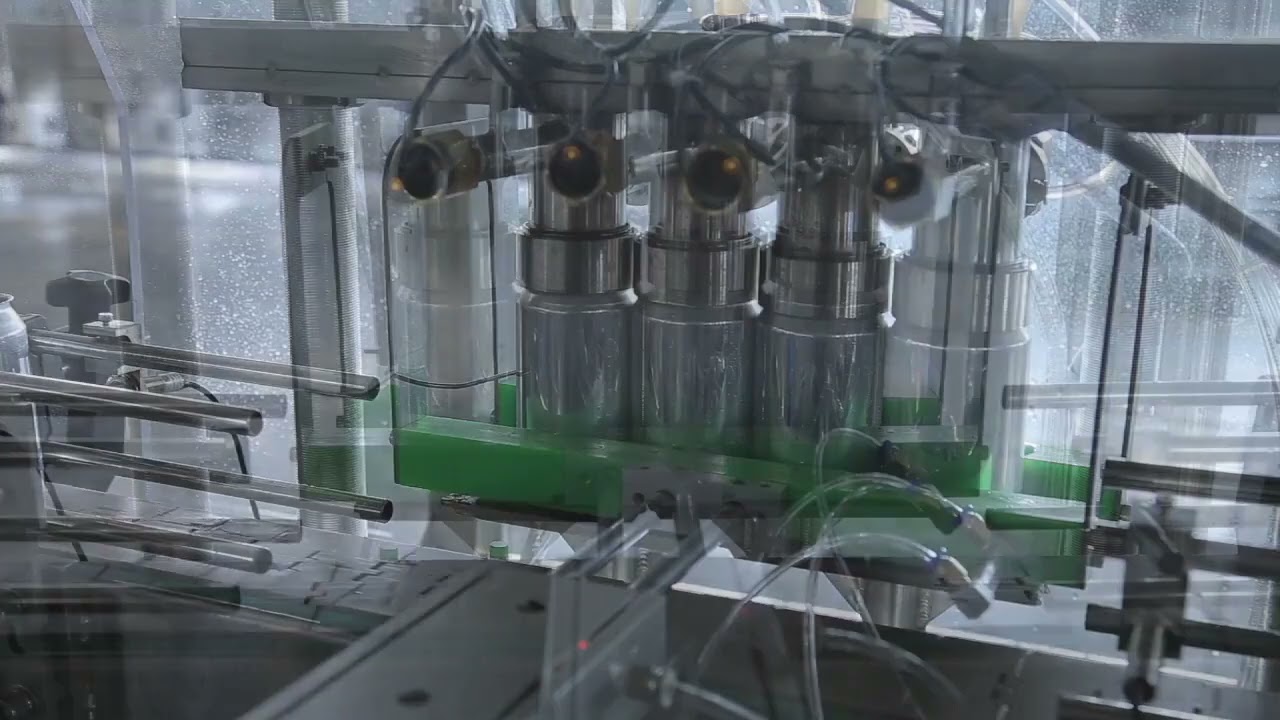
Automation improves beer brewing equipment by controlling temperature, flow, pressure, timing, tank levels, and cleaning cycles with less manual adjustment. A PLC can repeat a programmed recipe across many batches, while sensors continuously measure process conditions. For breweries producing 1,000 bbl or more per year, this can reduce operator workload and make batch records easier to compare. Water use can range from about 4 to 12 gallons per gallon of beer, so automated rinsing and CIP control can also affect resource use. The Brewers Association's 2023 five-year benchmarking report found a median electricity use of 140 kWh per barrel among 20 participating breweries in one reported benchmark group.
A modern Beer Production Equipment system usually combines temperature sensors, pressure transmitters, flow meters, VFD-controlled pumps, pneumatic valves, PLCs, HMIs, and data logging. The practical difference appears during repeated operations. A manual brewer may set a valve or heater several times during one batch; an automated system can apply the same sequence to 10, 50, or 200 batches without relying on memory for every step.
“A programmed sequence can replace repeated manual changes with measured conditions, preset limits, and recorded batch data.”
Mash temperature is one of the first areas where automation can improve repeatability. Enzyme activity changes with temperature, so a brewer producing wort with a target mash rest around 63–68°C needs tighter control than a simple “heat and hold” process. A temperature probe can sample the mash repeatedly, while the controller adjusts steam or electric heating to maintain the programmed value.
A 2°C difference may sound small, but mash conditions influence fermentable extract and the final beer profile. Automated heating also reduces overshoot: instead of heating well above 65°C and waiting for the temperature to fall, the system can reduce heat input as the measured value approaches the setpoint. A recipe can contain 3 or 4 programmed temperature stages, each with its own hold time.
The same control method extends to wort transfer. Pump speed affects flow rate, transfer time, pressure, and, in some systems, grain-bed behavior. A VFD allows a 7.5 kW or 11 kW pump to operate at different speeds instead of running at one fixed output.
| Process | Common automated input | Typical recorded data |
|---|---|---|
| Mashing | Temperature + heating | °C, time, heater output |
| Lautering | Flow + level | L/min, vessel level |
| Boiling | Heating control | temperature, time, steam position |
| Transfer | Pump speed | flow rate, start/stop time |
| Fermentation | Tank temperature | °C, pressure, time |
| CIP | Temperature + conductivity | °C, concentration, cycle time |
Flow control becomes more useful when the brewery handles multiple vessels. A 20 hL brewhouse may have several transfers in one production day, while a larger 100 hL system can require coordinated movement between mash vessels, kettles, whirlpools, heat exchangers, and fermentation tanks. Automation can confirm valve positions before starting a pump, reducing incorrect routing during a transfer.
Lautering benefits from the same measurement approach. Differential pressure across the grain bed can be monitored while pumps operate at a controlled speed. If pressure rises above a programmed limit, the system can reduce flow or stop the pump rather than relying only on an operator noticing a change. This matters during repeated production because a 5-minute interruption on each batch can accumulate to more than 40 minutes across 8 batches.
Boiling also becomes easier to standardize when the heating profile is stored in the control system. A batch may require a ramp to boiling followed by a 60-minute boil, with hop additions at 15, 30, and 45 minutes. The system can trigger alarms or control automated addition equipment at those timestamps, while the operator focuses on ingredient verification and quality checks.
“The brewer still defines the process; the control system repeats the selected settings and records what happened.”
Cooling is another area where measured control matters. Wort leaving the kettle must be cooled before yeast pitching, and the required temperature depends on the yeast strain and recipe. An automated plate heat exchanger system can regulate cooling water or glycol flow according to the measured wort temperature.
A 10°C pitching target, for example, can be maintained more consistently when a sensor continuously reports outlet temperature. If incoming water conditions change during the day, the control system can adjust the cooling circuit rather than assuming the same valve position will produce the same result at 9 a.m. and 4 p.m.
Fermentation then adds several days of temperature control. Brewers Association resources describe fermentation as a process strongly influenced by time and temperature, with current technical brewing material in 2026 also emphasizing yeast nutrition and data-based fermentation management.
A fermentation tank can be set to 18°C for an ale, 12°C for a lager phase, or another recipe-specific value. The controller reads the tank sensor and operates the glycol valve when the beer rises above the programmed range. A brewery with 12 tanks would otherwise need repeated manual checks across many temperature loops during a 24-hour period.
Fermentation automation can also handle staged profiles. For example:
-
Hold at 18°C during primary fermentation.
-
Increase to 21°C for a defined conditioning period.
-
Reduce by 1–2°C per day during cooling.
-
Reach a final cold-conditioning setpoint.
The exact profile remains a brewing decision, but the system can execute the programmed temperatures consistently across 5, 10, or 20 tanks.
Pressure monitoring can be added to the same system. Pressure transmitters can record tank pressure while mechanical or automated devices manage gas and pressure within the equipment's operating range. Recorded pressure and temperature trends can help operators compare fermentation batches and identify unusual behavior earlier than a manual logbook.
Cleaning-in-place is another strong use case because the process already contains measurable stages. A CIP recipe can specify rinse duration, caustic circulation, intermediate rinse, acid cycle, final rinse, and sanitizer stage. A brewery can also monitor temperature and conductivity where suitable sensors are installed.
The water requirement gives this process practical importance. EPA material states that breweries can use approximately 4–12 gallons of water for each gallon of beer produced.
For a brewery producing 5,000 gallons of beer, that broad range corresponds to roughly 20,000–60,000 gallons of water. Automation cannot remove all cleaning water, but it can make cycle times, valve sequencing, temperature limits, and chemical conditions more repeatable.
“A 20-minute rinse that consistently runs for 20 minutes is easier to manage than a rinse that depends on an operator watching the clock.”
Energy monitoring benefits from the same approach. Brewers Association benchmarking published in 2023 reported a median electricity use of 140 kWh/bbl for one group of 20 participating breweries, with reported values ranging from 49 to 525 kWh/bbl in the illustrated benchmark.
Automation can reduce unnecessary equipment runtime by shutting off pumps after a transfer, adjusting VFD speed during lower-flow periods, and stopping heating after a temperature target is reached. These controls do not guarantee a fixed percentage of savings because building design, batch size, utility prices, insulation, and equipment efficiency vary widely.
Data logging adds another layer of control. A brewery can store the actual mash temperature, boil duration, wort transfer rate, fermentation temperature, tank pressure, and CIP cycle time instead of keeping only a final batch number. After 30 or 100 batches, these records allow production teams to compare operating patterns across different dates, recipes, and vessels.
For example, if a transfer that normally takes 18 minutes begins taking 24 minutes over several batches, the production record can show whether pump speed, flow rate, valve position, or tank level changed. That information is more useful for maintenance than a note saying only that the transfer was “slow.”
Automation also changes operator workload. A brewer supervising 6 fermentation tanks may have to inspect temperature and pressure several times per shift without automatic control. With automated loops, the system can maintain normal conditions and generate an alarm when a measured value leaves the configured range.
This does not remove the need for staff. Operators still check ingredients, sanitation, yeast condition, sensory quality, calibration, equipment status, and abnormal readings. In many breweries, automation works best when it handles repetitive equipment control while people review the process and respond to exceptions.
Recipe management becomes more useful as the product range grows. A brewery making 8 beer styles may have different mash temperatures, boil times, hop additions, fermentation profiles, and transfer sequences for each product. Saving those settings in the control system reduces repeated manual entry.
A recipe database can also record revisions. If a fermentation setpoint changes from 19°C to 18°C in 2026, the brewery can document when the change occurred and apply it to later batches. This creates a clearer production record than relying on handwritten notes or informal instructions passed between shifts.
System design still matters as much as software. A control panel cannot compensate for an incorrectly sized pump, poorly positioned temperature probe, unsuitable valve, weak insulation, or an undersized heat exchanger. Sensor placement is particularly important because the recorded value needs to represent the process location that matters.
For example, a temperature sensor placed close to a heating outlet may read differently from the average temperature of a well-mixed vessel. A flow meter with the wrong range may also provide poor resolution at low flow. Equipment selection therefore needs to consider expected operating ranges, not only maximum capacity.
A practical automation specification might compare requirements like these:
| Item | Small brewery example | Larger production example |
|---|---|---|
| Brewhouse size | 10–20 hL | 50–100+ hL |
| Fermentation tanks | 4–8 | 12–30+ |
| Recipe control | Basic | Multi-stage |
| Pump control | Manual/VFD | Integrated VFD |
| Valve operation | Manual/pneumatic mix | Automated manifold |
| CIP | Semi-automatic | Fully sequenced |
| Data logging | Selected points | Full batch history |
The choice between partial and full automation should match production volume and operating needs. A 10 hL taproom brewery may only need automatic temperature control, VFD pumps, tank cooling, and digital timers, while a 100 hL production brewery may gain more from integrated valves, automated CIP, recipe control, batch logging, and centralized HMI supervision.
The investment should also be assessed over the equipment's expected service life. A system operating 2 batches per week has very different automation requirements from one running 3 batches per day, 6 days per week. At 18 batches per week, one small timing or setup difference repeated on every batch can affect more than 900 production cycles over a year.
Maintenance must be included in the equipment plan. Sensors require calibration checks, pneumatic valves require service, pumps need inspection, and control hardware needs spare parts and technical support. A brewery should know whether the PLC, HMI, sensors, VFDs, and valve actuators can be replaced without redesigning the entire system.
Operator interface design also affects daily use. An HMI that places 40 unrelated controls on one screen can slow troubleshooting, while a clear interface can show tank temperature, pressure, pump state, active recipe step, alarms, and remaining cycle time in one view. For a process lasting 60 minutes, even a 2-minute delay per manual confirmation becomes measurable across repeated batches.
Modern brewing facilities increasingly treat automation as part of process management rather than simply remote valve control. Current Brewers Association technical resources in 2026 include data-based fermentation management, yeast monitoring, freshness control, and sustainability benchmarking, showing how brewing practice is increasingly tied to measurable process information.
For equipment buyers, useful specifications include temperature accuracy, sensor response time, flow-meter range, pump capacity, VFD rating, valve feedback, PLC brand, HMI functions, recipe storage, alarm history, batch-data retention, CIP control, and remote diagnostic options. A system with 10 well-chosen measurements can be more useful than one with 50 poorly placed sensors.
The strongest equipment configuration is usually the one that matches the brewery's actual production pattern. A small facility producing 500 bbl per year does not need the same control architecture as a plant producing 20,000 bbl, and a brewery with 4 beer styles does not need the same recipe management as one producing 30. Automation should therefore be specified around batch frequency, vessel count, cleaning cycles, temperature requirements, labor availability, and planned production growth rather than around the number of features listed in a brochure.