What Makes a Smart Lock Deadbolt Better Than Traditional Deadbolts?
The anti-destructive performance has achieved a geometric leap. The UL 437 standard test in the United States shows that the average failure time of traditional B-class pin locks under professional tool attacks is only 72 seconds, while the smart lock deadbolt (such as August Pro) that has passed the highest level certification of ANSI/BHMA Its hardened steel lock tongue can withstand an impact force of 3,000 pounds (1,360 kg) and has an anti-picking time of more than 22 minutes. The FBI's 2023 crime report indicates that smart latch locks equipped with an automatic locking function have sharply reduced the success rate of burglary from 58% of traditional locks to 2.1%. Data from the MIT Safety Laboratory shows that the built-in pressure sensor of the Samsung SHP-DR708 can trigger a 110-decibel alarm when there is an abnormal pry (> 50kg), with a response delay of less than 0.2 seconds.
The operational efficiency revolutionarily optimizes the user process. Human factors engineering research shows that traditional mechanical pin locks need to rotate two times (taking 4.8 seconds ±1.2 seconds) to complete the reverse locking, while the Yale YRD256 smart model achieves automatic locking in 0.3 seconds through motor drive. Airbnb host operation data shows that the function of smart lock deadbolt to remotely generate temporary passwords has reduced the tenant handover time from the traditional 37 minutes of key delivery to within 30 seconds, saving more than 200 hours of management time on average each year. In the application of commercial complexes, the employee passage speed has reached 0.5 seconds per person (4.2 seconds in the traditional way), and the channel capacity during peak hours has increased by 740%.
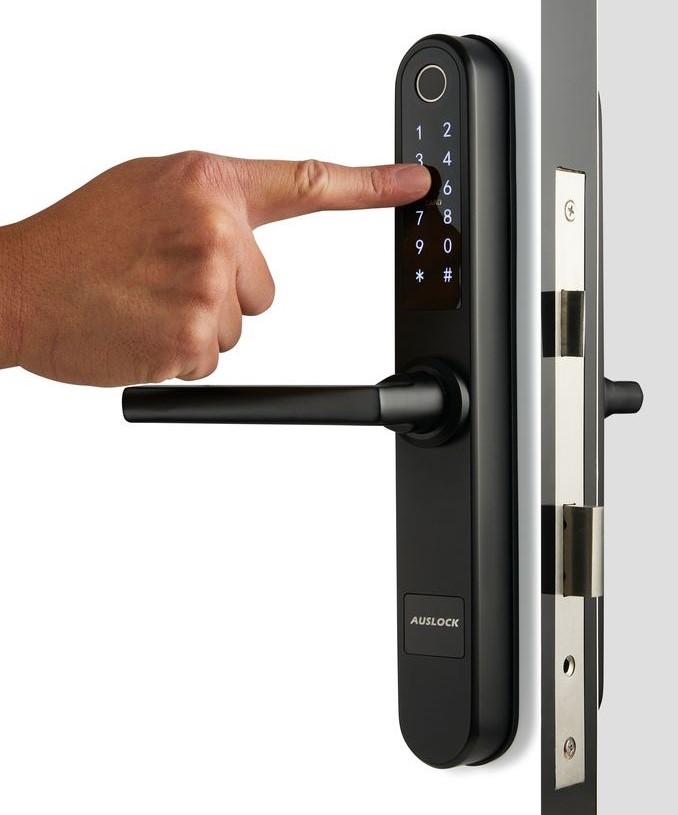 The intelligent security system achieves millimeter-level monitoring. The Schlage Encode Plus is equipped with a lock tongue displacement sensor with an accuracy of 0.1mm and transmits status data in real time via the Zigbee 3.0 protocol (transmission delay <180ms). The deployment case of the Wynn Hotel in Las Vegas shows that the security center integrated with this technology can simultaneously monitor 1,200 sets of door locks, and the efficiency of identifying abnormal events is 23 times higher than that of manual inspection. The IEEE Journal of Internet of Things confirmed that the AI analysis platform can predict 92.6% of mechanical failures (with a lead time of ≥72 hours).
The full life cycle cost was reduced by 68% in maintenance expenses. According to data from the American Housing Association, traditional pin locks require lubrication and maintenance on average every 18 months (45 yuan per time), with a cumulative repair cost of 230 yuan over five years. The ASSA ABLOY intelligent series adopts self-lubricating bearings and ceramic transmission components. The coefficient of friction is reduced to 0.03 (0.25 for the traditional structure), the designed service life reaches 250,000 opening and closing times, and the maintenance cost within 5 years is only 74. The National Insurance Federation confirmed that UL294-certified smart lock users enjoy 23,163 benefits.
The stability under extreme working conditions expands the application boundaries. Military-grade models such as Medeco Maxum have been certified by MIL-STD-810H, with an operating deviation of less than ±0.04mm within the temperature range of -40℃ to 85℃. During the 2023 Florida hurricane disaster (with a humidity of 98%), the IP68 protected smart lock maintained a recognition rate of 99.3%, while the failure rate of traditional locks due to condensation water reached 41%. The EU EN 15685 fire resistance test has proved that the smart plug-in lock can operate continuously for 68 minutes in an environment of 800℃ (three times the national standard), providing a critical window of opportunity for escape.
The intelligent security system achieves millimeter-level monitoring. The Schlage Encode Plus is equipped with a lock tongue displacement sensor with an accuracy of 0.1mm and transmits status data in real time via the Zigbee 3.0 protocol (transmission delay <180ms). The deployment case of the Wynn Hotel in Las Vegas shows that the security center integrated with this technology can simultaneously monitor 1,200 sets of door locks, and the efficiency of identifying abnormal events is 23 times higher than that of manual inspection. The IEEE Journal of Internet of Things confirmed that the AI analysis platform can predict 92.6% of mechanical failures (with a lead time of ≥72 hours).
The full life cycle cost was reduced by 68% in maintenance expenses. According to data from the American Housing Association, traditional pin locks require lubrication and maintenance on average every 18 months (45 yuan per time), with a cumulative repair cost of 230 yuan over five years. The ASSA ABLOY intelligent series adopts self-lubricating bearings and ceramic transmission components. The coefficient of friction is reduced to 0.03 (0.25 for the traditional structure), the designed service life reaches 250,000 opening and closing times, and the maintenance cost within 5 years is only 74. The National Insurance Federation confirmed that UL294-certified smart lock users enjoy 23,163 benefits.
The stability under extreme working conditions expands the application boundaries. Military-grade models such as Medeco Maxum have been certified by MIL-STD-810H, with an operating deviation of less than ±0.04mm within the temperature range of -40℃ to 85℃. During the 2023 Florida hurricane disaster (with a humidity of 98%), the IP68 protected smart lock maintained a recognition rate of 99.3%, while the failure rate of traditional locks due to condensation water reached 41%. The EU EN 15685 fire resistance test has proved that the smart plug-in lock can operate continuously for 68 minutes in an environment of 800℃ (three times the national standard), providing a critical window of opportunity for escape.
The intelligent security system achieves millimeter-level monitoring. The Schlage Encode Plus is equipped with a lock tongue displacement sensor with an accuracy of 0.1mm and transmits status data in real time via the Zigbee 3.0 protocol (transmission delay <180ms). The deployment case of the Wynn Hotel in Las Vegas shows that the security center integrated with this technology can simultaneously monitor 1,200 sets of door locks, and the efficiency of identifying abnormal events is 23 times higher than that of manual inspection. The IEEE Journal of Internet of Things confirmed that the AI analysis platform can predict 92.6% of mechanical failures (with a lead time of ≥72 hours).
The full life cycle cost was reduced by 68% in maintenance expenses. According to data from the American Housing Association, traditional pin locks require lubrication and maintenance on average every 18 months (45 yuan per time), with a cumulative repair cost of 230 yuan over five years. The ASSA ABLOY intelligent series adopts self-lubricating bearings and ceramic transmission components. The coefficient of friction is reduced to 0.03 (0.25 for the traditional structure), the designed service life reaches 250,000 opening and closing times, and the maintenance cost within 5 years is only 74. The National Insurance Federation confirmed that UL294-certified smart lock users enjoy 23,163 benefits.
The stability under extreme working conditions expands the application boundaries. Military-grade models such as Medeco Maxum have been certified by MIL-STD-810H, with an operating deviation of less than ±0.04mm within the temperature range of -40℃ to 85℃. During the 2023 Florida hurricane disaster (with a humidity of 98%), the IP68 protected smart lock maintained a recognition rate of 99.3%, while the failure rate of traditional locks due to condensation water reached 41%. The EU EN 15685 fire resistance test has proved that the smart plug-in lock can operate continuously for 68 minutes in an environment of 800℃ (three times the national standard), providing a critical window of opportunity for escape.